

The Story Behind Louisiana's Culinary Icons

Introduction
Dah' Poboy Story... (Some information taken from Parkway Poboys) Brothers, Bennie and Clovis Martin, left their Raceland, Louisiana, home in the Acadia region in the mid-1910s for New Orleans. Both worked as streetcar conductors until they opened Martin Brothers Coffee Stand and Restaurant in the French Market in 1922.
The PoBoy Story
In 1929, the "poor boy" was created by the Martin brothers, who came up with the simple but hearty sandwich when the Amalgamated Association of Electric Street Railway Employees, Division 194, went on strike, sending over a thousand unionized streetcar drivers and motormen off the job and onto the picket line. The Martin brothers gave away sandwiches to the strikers that usually consisted of fried potatoes, gravy, and spare bits of roast beef on French bread.
The story goes that when a striking union member walked into their restaurant, Benny would call to Clovis, "Here comes another poor boy!" Today, hot roast beef poor boys dripping with gravy are the close relatives of these originals.
The Martin brothers soon realized that when they made their poor boys out of a traditional loaf of French bread, with tapered ends, the resulting sandwiches varied in size, and much of the loaf was wasted. The Martins worked with baker John Gendusa to develop an approximately 32-in loaf of bread that retained its uniform, rectangular shape from end to end. This innovation allowed for half-loaf sandwiches 20 inches in length, as well as a 15- inch standard and smaller ones.
The delicious bread benefitted from what chef Josh Domilese, the fourth generation to run Domilese’s Po-Boys in New Orleans, calls "the secret weapon": New Orleans humidity. People showed up in droves for the Martin brothers’ sandwiches.
But Martin Brothers Coffee Stand and Restaurant wasn’t the only poor boy game in town. Among other restaurants, Parkway Bakery and Tavern owner Henry Timothy, Sr. also added the "Poor Boy" shop to Parkway in 1929 and fed union members and conductors French fry poor boys for free. Meanwhile, Parkway was also selling the recently invented poor boy sandwich to the workers at the American Can Company. They operated twenty-four hours a day, so with the addition of the poor boy, so did Parkway.
By the start of the Great Depression, the carmen had lost the strike and their jobs. The continuing generosity of the Martins as well as the size of the sandwiches proved to be a wise business decision that earned them hundreds of new customers. As the Depression worsened, many New Orleanians fed themselves and their families the famously oversized poor boy sandwiches. In the 1930s, a 20-inch half-loaf poor boy sandwich could be purchased for 15 cents!
Different types of poor boys soon developed strong followings and unique names. The Peacemaker continued to be a favorite, and has its own fascinating origin story:
Referred to as the ancestor of the poor boy, in the late 1800s, fried oyster sandwiches on French loaves were known in New Orleans and San Francisco as “oyster loaves,” a term still in use. A sandwich containing both fried shrimp and fried oysters is often called a “peacemaker.” In his book The Art of the Sandwich, Jay Harlow suggests that The Peacemaker was allegedly named for 19th-century husbands who would bring them home to waiting spouses as a preemptive apology for any (presumably) questionable behavior.
Thanks in part to their poor boy, the Martin brothers thrived. Although they had been selling “sandwiches of half a loaf of French bread generously filled with whatever one desired, from roast beef to oysters” near the old French Market in the early 1920s, it was in 1929 when they coined the name “poor boy” for versions of these sandwiches that the local media caught on and included the reference in their streetcar strike reporting–and a culinary legend found its roots.
In the late 1930s, Bennie and Clovis parted ways, with Clovis going on to develop several other restaurants throughout the city known as Martin and Son Poor Boy Bar and Restaurant. Their locations on Gentilly and Airline Highway lasted the longest. Clovis died in 1955, and Martin Brother’s St. Claude restaurant survived into the 1970s– with signs declaring the brothers as the "Originators of Poor Boy Sandwiches." By then, the poor boy/po'boy/ po-boy/po boy sandwich name had spread far beyond New Orleans.
According to historian Errol Laborde, the correct way to refer to the sandwich is “poor boy” because it was created by the Martin brothers after the streetcar strikers – those “poor boys.” But whether it’s referred to as a poor boy, po’ boy, po-boy, or po boy, what everyone can agree on is that the famous sandwich holds its place in the hearts of generations of Louisiana families and its many fans around the world.
What Bout Dat ROUX
Roux, a paste of cooked flour and fat, originated in 17th-century France as a thickener for elegant sauces, becoming foundational to French cuisine (like Mother Sauces); French colonists brought it to America, where Cajun/Creole cooks adapted it, browning it longer with oil or lard for deep, nutty flavors essential in gumbo and étouffée, creating a distinct, rich culinary tradition.
Roux (pronounced "roo") traces its origins back to classical French cuisine, where it was developed as a foundational element in many sauces and soups. The term “roux” comes from the French word for “browned,” reflecting the toasty, nutty flavor that develops when flour is cooked in fat. Early French chefs used roux to create their “mother sauces,” such as béchamel and velouté, which served as the building blocks for countless recipes.
As French settlers brought their culinary traditions to Louisiana in the 18th century, roux became a cornerstone of Cajun and Creole cooking. Over time, these communities adapted the classic French technique to suit local ingredients and flavors. Today, roux is a signature element in dishes like gumbo and étouffée, as well as a variety of thick, savory soups and stews.
What Is Roux Used For?
Roux serves two primary purposes in cooking: thickening and flavoring. Its versatility
makes it an essential ingredient in a wide range of dishes, from traditional French sauces
to modern comfort foods. Here’s a closer look at how roux is used:
Thickening Soups and Stews
Roux is most commonly used to give body and texture to soups, stews, and chowders. For
example, a classic potato soup or chicken and rice soup benefits from the creamy
thickness that roux provides. It helps create a smooth, velvety consistency, ensuring your
soup isn’t watery or thin.
Cajun and Creole Classics
In Louisiana cuisine, roux plays a starring role in iconic dishes like gumbo and étouffée.
Here, the roux is typically cooked longer, reaching a rich brown color that adds a deep,
nutty flavor. This not only thickens the dish but also imparts a distinctive taste that’s
central to Cajun and Creole food.
Creamy Sauces and Gravies
Roux is the starting point for many beloved sauces, including béchamel, the base for
dishes like macaroni and cheese, and velouté, which is often used in poultry or seafood
recipes. It’s also key to making smooth, lump-free gravies, whether you’re preparing a
holiday turkey or a weeknight roast.
Cheesy Soups and Chowders
If you’ve ever enjoyed a bowl of broccoli cheddar soup or clam chowder, you’ve tasted the
magic of roux. It provides the thick, creamy base that makes these soups rich and
satisfying, ensuring the cheese or dairy blends seamlessly into the dish.
Let's pick up the story in the 1880s. By then, cooks in New Orleans were making three primary varieties of their famous stew: okra-based gumbo févi, gumbo filé thickened with powdered sassafras, and gumbo aux herbes. The last variant, often called gumbo z'erbes, is made with any combination of greens—mustard, beet, turnip, spinach—and it was a popular Lenten dish.
It was only toward the end of the 19th century that the ingredient that's perhaps most closely associated with gumbo today made its way into the pot: roux. A staple of French cuisine, it's a blend of flour and fat (usually oil for gumbo) cooked together, used as a thickening agent and—particularly in its darker Creole and Cajun variants—as a flavoring agent, too.
Adding roux to gumbo was definitely a Louisiana innovation, and it seems to have been used first with oyster gumbos. In July 1880, after the New Orleans City Item ran an article on gumbo, they received a letter from "a lady who is a very competent authority in such matters" instructing them on the "genuine Creole method of making gumbo." She provided instructions for a standard chicken and okra gumbo with no roux, then followed it with a recipe for gumbo filé with oysters. It begins "make a roux and brown the ingredients as in the other recipe.
Lafcadio Hearn's La Cuisine Creole (1885) includes eight different gumbo preparations, three of which are for oyster gumbo. One of them opens like this: "Fry a tablespoon of flour in a tablespoon of lard. Let it brown slowly so as not to scorch." Though not called out by name, that's a roux. It's added to two quarts of boiling oyster liquor along with onions, ham, and parsley. The oysters themselves are introduced at the very end along with a half cup of filé powder.
In 1894, the New Orleans Times-Democrat declared, "the roux is the basis of everything good in the creole culinary line, such as gumbo, both okra and filé, daube stew, those wonderful fricassees, etc." Still, it took a good half a century to become universal in New Orleans-style gumbo. The 1922 Picayune Creole Cookbook included recipes for roux-free gombo filé, gombo févi, and gombo aux herbes, though its oyster gumbo and shrimp gumbo both begin with a roux made from a tablespoon for lard or butter and two tablespoons of flour. It wasn't until the 1950s that roux became the standard in Creole gumbo recipes—and in Creole cooking in general.
Roux was such a kitchen staple that in 1956 the I-ron Pot Packing Company of Ville Platte, Louisiana, introduced a line of instant roux. "Now," its advertisements promised, "anyone can make gumbo, stew, fricassee, sauce piquante, spaghetti, dishes, gravy, dressings, in a fraction of the former time." I-Ron Pot Roux was advertised in New Orleans newspapers for more than a decade, and other brands, like Tony's Instant Creole Roux, are still on the market today.
What makes Patton's Hot Beef Sausage special...
A patty made of hot sausage..now that is something that has to be good and it is. The famous Patton's Sausage Company has been producing their hot sausage products in the New Orleans area for decades. Patton's Sausage Co is produced in Bogalusa, La. Established in 1942, it is now operated by its third generation where there recipes remain a secret.
Pop C's Poboy Bread: John Gendusa Bakery in New Orleans
John Gendusa Bakery first opened on September 24, 1922. By the end of that decade, baker John Gendusa and restauranteurs Bennie and Clovis Martin were tasked with finding an economical way to make a sandwich to feed striking streetcar workers. Inspired by his youth in Sicily, John Gendusa produced a long, uniform loaf of bread for the Martin Bros. From this loaf the Poor Boy sandwich was born. We have been producing our famous Poor Boy Bread ever since.
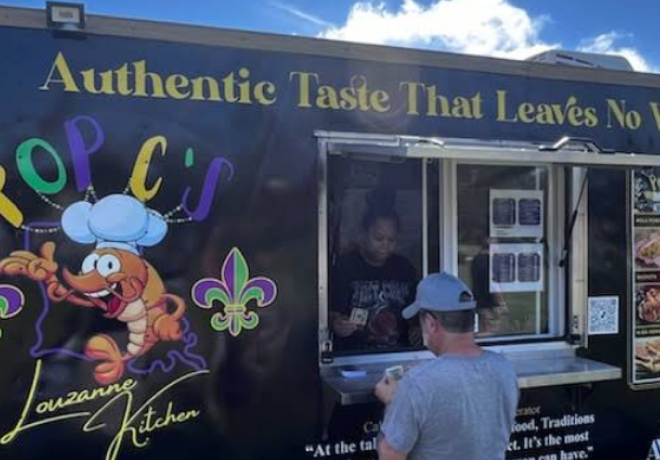
Gendusa Bakery has now been a family-run business for four generations. It is one of the few surviving traditional bread bakeries still operating in the city. Our po-boys, pistolettes, and muffuletta loaves are still baked using our founder's original formula. We supply bread to Gene's Poboys, Parran's Po-boys, Parkway Poboys and many others throughout the city as well as our new partnership with Pop C's LouZanne Kitchen located in Riverview, FL, a suburb near Tampa, FL.
Our current owner, Jason, lives next door to the bakery with his wife and two young children. He and his father are responsible for everything that keeps the business running: baking, office work,the repair of equipment and delivery trucks, and more. The levee broke four blocks from the bakery after Hurricane Katrina in 2005. Although the flood damage was extensive, Jason and his father decided to take responsibility for re-building a historic business. Though our bread is only sold wholesale, if you happen to pass by and smell the bread baking, you can knock on the screen door to buy a loaf, as most of our neighbors do.
Conclusion
Cajun/Ceole/Southern Louisiana cooking hits different. The long, deep- rooted history, culture, and traditions of our ancestors and their descendents paved the way for remarkable, flavorful dishes. These dishes are prepared meticulously, slowly, and attentively with two main ingredients - intentionality and love. The history and the taste speaks for itself. Each time Louisiana foods arw consumed, you will have an encounter that Can't Be Explained, Only Experienced!